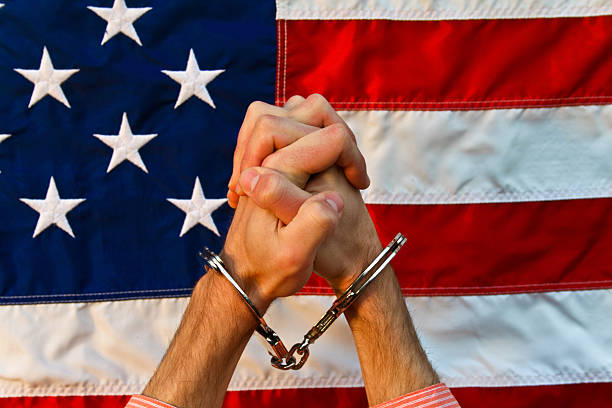
The rights of state prisoners in the United States vary dramatically depending on geography. Federal laws establish a minimum baseline of legal protections for incarcerated individuals. However, individual states retain broad authority to set specific prison policies. State statutes, administrative rules, and regional court rulings shape daily life behind bars.
A prisoner in Maine retains rights that a prisoner in Texas loses upon conviction. Rights regarding voting, medical care, labor, and isolation differ across state borders. This state-by-state patchwork creates significant disparities in how penal institutions treat human beings. Understanding these legal differences illuminates the fragmented nature of American criminal justice.
The Federal Baseline and the State Patchwork
The Eighth Amendment prohibits cruel and unusual punishment across all jurisdictions. The Fourteenth Amendment guarantees basic due process and equal protection under the law. Federal legislation like the Religious Land Use and Institutionalized Persons Act sets national standards. These laws create the basic legal floor for prisoner treatment nationwide.
State governments possess wide discretion to build upon or limit this federal floor. State constitutions often grant broader civil liberties than the federal Constitution. State legislatures enact specific statutes that govern correctional department operations. Consequently, fifty separate state prison systems operate under fifty distinct legal frameworks.
Federal courts often defer to state prison officials on institutional security matters. This deference allows states to enforce vastly different operational guidelines. One state may ban solitary confinement for vulnerable groups entirely. A neighboring state may permit indefinite isolation for minor rule infractions.
Voting Rights and Felon Disenfranchisement Rules
Voting rights represent one of the most stark examples of state-level variation. The United States Constitution leaves voter qualification rules largely to individual states. Some states view civic participation as an undeniable right that survives incarceration. Other states strip voting rights permanently upon a felony conviction.
State laws regarding disenfranchisement fall into several distinct legal categories across the country:
- Full retention of voting rights while serving prison sentences in state facilities.
- Automatic loss of voting rights during incarceration with automatic restoration upon physical release.
- Loss of voting rights during incarceration, parole, and probation supervision periods.
- Loss of voting rights requiring formal individual petitions or executive pardons for restoration.
- Permanent disenfranchisement for specific violent or sexual felony convictions.
Maine and Vermont allow incarcerated felons to vote by absentee ballot from prison cells. Washington, D.C. also permits incarcerated residents to cast ballots during imprisonment. Conversely, states like Virginia and Mississippi impose severe, lasting restrictions on post-release voting rights.
State Name | Voting Status During Incarceration | Restoration Process Upon Release |
Maine | Full voting rights retained | No restoration needed; retains ballot |
California | Voting rights suspended | Automatic restoration upon release from prison |
Texas | Voting rights suspended | Restoration after completing prison, parole, and probation |
Virginia | Voting rights suspended | Requires individual governor approval or court order |

Solitary Confinement Policies and Duration Limits
Solitary confinement rules differ widely across state correctional systems. Reformers refer to solitary confinement as administrative segregation or restrictive housing. Prolonged isolation causes severe, long-lasting psychological damage to incarcerated individuals. Some states actively restrict solitary confinement while others use it routinely.
New York passed the HALT Solitary Confinement Act to limit isolation strictly. New York law caps solitary confinement at fifteen consecutive days. The law also bans isolation for young adults, pregnant women, and disabled individuals. New Jersey enacted similar legislation to restrict prolonged restrictive housing practices.
In contrast, several southern states place few statutory limits on solitary confinement duration. Incarcerated people in Texas and Florida can spend years in solitary units. State policies determine whether prisoners receive daily outdoor access or mental health checks.
State Name | Statutory Cap on Solitary Confinement | Excluded Vulnerable Populations |
New York | 15 consecutive days maximum | Pregnant women, youth, elderly, disabled individuals |
New Jersey | 20 consecutive days maximum | Individuals with serious mental health conditions |
Colorado | 15 consecutive days maximum | Persons with serious mental illness |
Texas | No statutory duration limit | Varies by internal administrative review |
Labor Obligations and Wage Scales
The Thirteenth Amendment permits involuntary servitude as punishment for a crime. Most state prison systems compel incarcerated individuals to work assigned jobs. Refusing a work assignment often leads to disciplinary write-ups and solitary confinement. However, wage policies and labor protections vary drastically between states.
State laws establish widely different pay structures for inmate labor assignments:
- Complete absence of hourly pay for routine institutional work assignments.
- Sub-minimum wage rates ranging from a few cents to two dollars per hour.
- Industry program wages that match minimum wage for specialized commercial work.
- Mandatory wage deductions for room, board, court restitution, and savings accounts.
- Voluntary labor participation rules enforced by specific progressive state laws.
States like Texas, Georgia, and Alabama do not pay inmates for standard prison labor. Incarcerated workers clean floors, cook meals, and farm crops without monetary compensation. Conversely, states like Washington and California pay modest hourly wages for institutional work.
State Name | Standard Inmate Hourly Wage Range | Pay for Refusing Work Assignments |
Georgia | $0.00 per hour (Unpaid) | Mandatory labor; refusal triggers discipline |
Texas | $0.00 per hour (Unpaid) | Mandatory labor; refusal triggers discipline |
California | $0.08 to $0.37 per hour | Mandatory labor; refusal triggers discipline |
Colorado | $0.33 to $0.86 per hour | Mandatory labor; refusal triggers discipline |
Healthcare Standards and Medical Co-Pay Requirements
The Supreme Court mandates that state prisons provide basic medical care to prisoners. Prisons cannot display deliberate indifference to serious medical needs under federal law. Despite this constitutional rule, the quality and accessibility of prison healthcare vary dramatically. State budgets and administrative policies dictate daily medical care standards.
Many states require incarcerated individuals to pay medical co-pays for sick call visits. These fees range from two dollars to five dollars per medical appointment. While two dollars sounds small, it represents weeks of prison labor wages. High co-pays deter impoverished prisoners from seeking necessary medical treatment.
California eliminated medical co-pays for incarcerated individuals to improve healthcare access. Several other states retain co-pay requirements despite pushback from public health experts. Furthermore, state laws dictate whether private corporate vendors or state universities manage prison healthcare.

Reproductive Rights and Shackling Protections
Reproductive rights for incarcerated women depend heavily on state statutory protections. Historically, prison staff routinely shackled pregnant prisoners during labor and delivery. Physical restraints during childbirth create severe medical risks for mothers and infants. Federal law banned shackling in federal prisons through the First Step Act.
State laws governing pregnant prisoners vary across state jurisdictions:
- Total statutory bans on physical restraints during labor, delivery, and recovery.
- Conditional bans that allow restraints only under extraordinary security threats.
- Mandatory access to comprehensive prenatal nutrition, doctor visits, and addiction care.
- Guaranteed access to abortion services funded by state healthcare frameworks.
- Formal policies covering nursery programs that allow mothers to keep newborn babies.
Over thirty-seven states have passed laws restricting the shackling of pregnant prisoners. However, enforcement mechanisms and policy details differ significantly between state facilities. Some state statutes completely ban waist chains and leg irons. Other state policies allow guards to use restraints at their personal discretion.
Gender Identity, Transgender Care, and Housing Policies
The treatment of transgender prisoners represents a rapidly evolving area of state law. Federal standards under the Prison Rape Elimination Act require individualized housing evaluations. However, state correctional departments implement these federal standards in vastly different ways. State policies govern housing placements, name changes, and medical care access.
California passed Senate Bill 132 to address transgender housing rights directly. The law allows transgender individuals to request placement in facilities matching their gender identity. Connecticut and Rhode Island also enforce progressive housing policies for transgender residents. These states prioritize gender identity during initial intake and housing classification.
In contrast, other states require housing placement based strictly on biological sex assigned at birth. These states often deny gender-affirming medical treatments, such as hormone therapy or surgeries. Disparities in state law leave transgender prisoners vulnerable to physical abuse and medical neglect.
Visitation Rights and Video Communication Rules
Maintaining family connections reduces recidivism rates among formerly incarcerated people. Yet, visitation rights remain subject to state-level administrative decisions. State prison departments establish specific rules for contact visits, non-contact visits, and video calls. Some states protect physical visitation rights, while others replace in-person visits with paid video calls.
Several state legislatures passed laws protecting the right to in-person family visitation. California and New York restrict facilities from eliminating physical visitation blocks. These states recognize that physical contact with children and spouses supports long-term rehabilitation.
Conversely, private telecommunication vendors influence visitation policies in other states. Some local jails and state facilities ended in-person visits entirely. They forced families to use expensive, proprietary video calling software instead. State regulations determine whether video technology supplements or replaces physical family contact.
Mail Censorship, Books, and Digital Access
First Amendment protections apply to incoming and outgoing prisoner correspondence. However, prison officials can censor mail to maintain institutional security and order. State correctional departments enforce wildly different rules regarding physical books, letters, and educational materials. State policies determine what literature enters prison walls.
State regulations regarding prisoner mail and reading materials feature distinct rules:
- Strict approval lists that limit book deliveries to designated commercial vendors.
- Digitization policies that scan physical letters and deliver digital copies on tablets.
- Broad censorship standards that ban books discussing criminal justice reform or race.
- High fee structures for electronic messaging, music downloads, and e-book access.
- Specific legal mail inspection rules conducted exclusively in the presence of the prisoner.
States like Texas maintain extensive lists of banned books and publications. Texas prison officials have banned thousands of titles, including famous literary works and history books. Meanwhile, other states enforce narrower censorship guidelines focused strictly on escape plans or bomb-making instructions.
Religious Freedom and Dietary Accommodations
Federal law protects religious exercise for incarcerated individuals across all state lines. The Religious Land Use and Institutionalized Persons Act prevents states from imposing substantial burdens on religious practice. Prisons must accommodate religious diets, group worship services, and sacred items unless security dictates otherwise.
Implementation of religious protections varies based on state resources and administrative willingness. Some states maintain diverse religious menus, offering certified Halal, Kosher, and vegan meals. These states allow prisoners to possess religious items like prayer rugs, pipes, and headwear.
Other state systems resist broad dietary accommodations due to operational costs. Incarcerated individuals in these states must frequently litigate in federal court to secure basic religious meals. State administrative court filings reveal ongoing legal battles over dietary rights and grooming waivers.

Grievance Procedures and Access to Courts
The Fourteenth Amendment guarantees incarcerated individuals meaningful access to the courts. Prisons must provide legal research tools, law libraries, or trained legal assistance. Furthermore, the Prison Litigation Reform Act forces prisoners to exhaust all internal grievance steps before filing federal lawsuits.
State grievance procedures vary widely in complexity and strictness. Some states enforce brief filing deadlines, requiring grievances within five days of an incident. Complex multi-tier grievance systems create procedural traps for incarcerated litigants. A single missed deadline permanently blocks a federal civil rights lawsuit.
State law libraries also differ in quality and technological capability. Some states provide digital legal databases like LexisNexis on inmate tablets. Other state facilities rely on outdated physical books or limited legal clerk assistance. These state-level differences directly impact an inmate's ability to challenge unlawful confinement.
Environmental Conditions and Extreme Temperatures
Climate change highlights stark differences in state prison environmental protections. Federal courts recognize that extreme hot or cold temperatures can violate the Eighth Amendment. However, statutory regulations governing prison climate control remain largely state-dependent. Southern states face severe challenges regarding extreme heat inside older housing blocks.
State environmental policies display clear regional differences across the nation:
- Mandatory air conditioning standards enforced across all state correctional housing units.
- Statutory temperature ranges requiring indoor climate controls during heatwaves.
- Emergency heat mitigation policies, including extra showers, ice distribution, and fans.
- Total absence of air conditioning in main cellblocks, relying solely on window ventilation.
- Comprehensive winter heating requirements designed to prevent freezing in northern facilities.
Texas operates dozens of state prison facilities without universal air conditioning. Indoor summer temperatures in these cells frequently exceed one hundred degrees Fahrenheit. Conversely, state regulations in northern states mandate minimum winter heating levels to protect prisoners from extreme cold.
Disciplinary Hearing Rights and Due Process
When prisoners break institutional rules, they face internal disciplinary proceedings. Disciplinary sanctions include solitary confinement, privilege losses, and lost good-time credits. The Supreme Court set basic due process rules for prison disciplinary hearings in Wolff v. McDonnell. Inmates deserve advance written notice, a qualified hearing officer, and the right to present evidence.
State administrative regulations expand or restrict these basic due process protections. Some states allow prisoners to retain formal legal counsel during major disciplinary hearings. Other states restrict representation to informal staff advisors or inmate paralegals.
Furthermore, state evidentiary standards for finding guilt vary significantly. Some states require substantial evidence to convict a prisoner of a rule violation. Other state regulations allow conviction based on minimal evidence or guard testimony alone. These procedural differences impact release dates and parole eligibility.
Conclusion
Prisoner rights in the United States represent a complex, fragmented legal landscape. While the federal Constitution guarantees basic human protections, state laws dictate daily living conditions behind bars. An incarcerated individual's civil liberties, healthcare access, labor compensation, and personal safety depend heavily on state geography. Progressive reforms in some states highlight humane alternatives to harsh penal practices. Meanwhile, conservative state policies maintain strict punitive measures and minimal amenities. Understanding these state-level differences remains essential for legal advocates, policymakers, and families navigating the American correctional system. Addressing these geographical disparities is crucial for building a fair, consistent, and humane national criminal justice framework.
Frequently Asked Questions
Why do prisoner rights differ so much between individual states?
State governments operate independent penal systems governed by state constitutions, statutes, and administrative policies. Federal law sets only a basic legal baseline, allowing states to establish distinct rules above that baseline.
Can an incarcerated person vote while serving a prison sentence?
Incarcerated individuals can vote in Maine, Vermont, and Washington, D.C. In all other states, voting rights are suspended during imprisonment for felony convictions.
Do all state prisons require incarcerated individuals to work?
Most state prison systems compel able-bodied incarcerated individuals to work. However, wage policies differ greatly, with some states paying small hourly wages and others paying nothing.
Is solitary confinement legal in every US state?
Solitary confinement remains legal nationwide, but several states have passed laws capping its duration. States like New York and New Jersey limit isolation to fifteen or twenty consecutive days.
Are state prisons required to provide air conditioning in hot states?
Federal courts require humane living conditions, but no federal law explicitly mandates air conditioning in all prisons. Consequently, states like Texas operate many un-airconditioned facilities.
Can a prison stop a prisoner from receiving physical letters?
Prisons can inspect incoming mail for contraband and censor content that threatens security. Many states now scan physical mail and deliver digital copies on electronic tablets.
What happens if a state prison violates a prisoner's constitutional rights?
An incarcerated person must complete all internal prison grievance steps first. After exhausting internal remedies, they can file a federal civil rights lawsuit under Section 1983.
Do state prisoners have a right to specialized religious diets?
Yes. Federal law requires prisons to accommodate religious diets unless the state proves a compelling security or financial reason. Most states provide Kosher, Halal, or vegetarian options.
How do transgender housing rules differ across state prison systems?
Some states like California allow transgender prisoners to request housing based on gender identity. Other states assign housing strictly according to biological sex at birth.
Are state prisons allowed to shackle pregnant prisoners during childbirth?
Over thirty-seven states prohibit or severely restrict the use of restraints on pregnant prisoners during labor and delivery. However, enforcement mechanisms vary by state jurisdiction.
Related Articles
More from the blog
Published articles selected by matching category, then the latest published.
 State RightsUnderstanding State Correctional Policies and Inmate RightsA comprehensive guide to understanding state correctional policies and inmate rights. Learn about constitutional protections, medical care, due process, and administrative grievance systems inside state prisons.
 State RightsFinding State-Specific Prisoner Rights ResourcesA comprehensive guide on locating state-specific prisoner rights resources. Learn how to access state directives, legal aid, protection agencies, law clinics, and self-help manuals.
 State RightsPrison System Guide: Florida Inmate Rights, Visitation & HelpReason: This guide focuses on Florida-specific inmate rights, prison policies, available resources, and support services. Since the content is tailored to Florida's correctional system, State Rights is the most appropriate category.
Find forms, resources and support
Explore court-ready forms, the resource directory, or contact us for help with a similar issue.