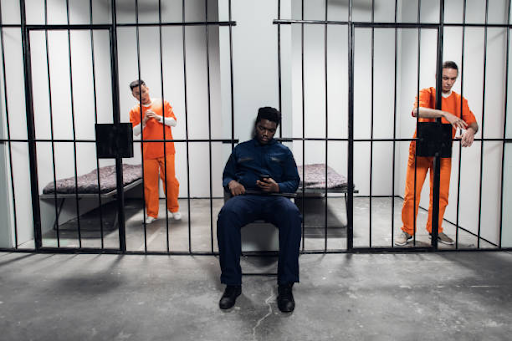
State correctional policies dictate the daily operations of prisons across the United States. These administrative rules govern housing, security, discipline, and healthcare inside state facilities. At the same time, federal and state laws guarantee basic rights for every incarcerated person. Balancing institutional security with individual legal protections remains a central challenge for prison administrators.
Navigating prison policies requires a clear understanding of legal frameworks. Incarcerated individuals do not forfeit all constitutional rights upon conviction. Courts uphold essential protections that safeguard human dignity and physical well-being behind bars. This comprehensive guide examines state correctional rules, legal frameworks, and fundamental inmate rights.
The Foundations of State Correctional Policies
Each state operates an independent department of corrections. State legislatures write laws that establish prison management frameworks. Department directors then create detailed operational directives to guide prison staff. These policies set uniform standards for security, inmate movement, and facility maintenance.
State regulations must comply with the United States Constitution. Federal courts set baseline legal standards that all state systems must respect. However, individual states retain broad discretion to structure daily prison operations. Consequently, rules regarding visitation, work assignments, and privileges vary significantly across state lines.
Correctional staff rely on written policies to maintain institutional order. Policy manuals define proper staff conduct and outline procedures for emergency situations. Clear rules prevent arbitrary decision-making by correctional officers. When state agencies update their official policies, they must notify incarcerated populations through updated handbooks.
Constitutional Protections for Incarcerated Individuals
The United States Constitution protects individuals even after criminal conviction. The Eighth Amendment prohibits cruel and unusual punishment by government officials. This protection mandates safe living conditions, adequate food, and basic healthcare. Prisons cannot subject individuals to inhumane treatment or unnecessary physical suffering.
The Fourteenth Amendment guarantees due process and equal protection under the law. Correctional departments cannot discriminate against incarcerated individuals based on race, religion, or gender. Furthermore, the First Amendment protects core freedoms such as religious practice and access to courts. The table below highlights key constitutional protections and their applications in prison settings.
Constitutional Provision | Legal Protection Granted | Application in State Facilities |
First Amendment | Freedom of speech and religious practice | Access to religious diets, texts, and approved mail |
Eighth Amendment | Prohibition of cruel and unusual punishment | Protection from physical abuse and unsafe conditions |
Fourteenth Amendment | Due process and equal protection guarantees | Fair disciplinary hearings and protection from bias |
Courts use specific legal standards to evaluate prison regulations. Judges often defer to prison administrators on matters of security and internal order. However, state policies that infringe on constitutional rights must serve a legitimate penological goal.

Due Process Rights in Disciplinary Hearings
Correctional facilities enforce strict behavioral rules to preserve safety. When an individual violates a prison rule, staff issue a formal disciplinary report. Because disciplinary sanctions can result in solitary confinement or lost good-time credits, due process protections apply. The Supreme Court established mandatory procedural safeguards for prison disciplinary proceedings in Wolff v. McDonnell.
Incarcerated individuals facing serious disciplinary charges retain specific procedural rights. State policies must outline clear steps for conducting fair disciplinary hearings. The list below highlights key due process rights during institutional disciplinary proceedings:
- Inmates must receive written notice of alleged rule violations at least twenty-four hours before the hearing.
- Accused individuals have the right to call witness testimony and present documentary evidence in their defense.
- Hearing officers must remain impartial and independent from the staff members who filed the report.
- Disciplinary boards must issue a written statement explaining the evidence relied upon and the final decision.
- Incarcerated individuals can request a staff representative to assist them during complex disciplinary reviews.
Minor rule infractions result in smaller penalties, such as loss of television or commissary privileges. Major infractions can lead to extended restrictive housing placements or delayed parole eligibility. Following strict due process guidelines ensures that facility administrators apply disciplinary sanctions fairly.
Housing Classifications and Facility Assignment Rules
Upon entering a state prison system, every individual undergoes a formal classification assessment. Classification officers evaluate criminal history, sentence length, behavior history, and escape risk. This objective assessment determines the security level of the assigned housing facility.
State systems maintain multiple security tiers, including minimum, medium, maximum, and supermax facilities. Minimum-security housing offers open dormitories and greater movement privileges. Maximum-security facilities enforce strict lockdown protocols, perimeter controls, and limited group activities. Proper classification ensures that facilities separate non-violent individuals from high-risk offenders.
Classification committees review inmate housing assignments periodically. Individuals who maintain clean disciplinary records can earn transfers to lower security facilities. Conversely, rule violations or violent incidents lead to reclassification and transfer to higher security units. Incarcerated individuals cannot contest basic housing transfers unless the move violates specific constitutional guarantees.
Access to Medical and Mental Healthcare Services
State correctional agencies hold a constitutional legal duty to deliver adequate medical care. The landmark Supreme Court ruling in Estelle v. Gamble established that deliberate indifference to serious medical needs violates the Eighth Amendment. Facilities must provide qualified clinical staff, emergency care, and chronic disease management.
Correctional healthcare covers physical health, dental care, and psychiatric services. Inmates submit written sick-call requests to schedule evaluations with facility nurses or physicians. Facilities must provide prescribed medications without unnecessary administrative delays. Deliberately withholding medical treatment or ignoring severe pain triggers constitutional liability for prison officials.
Mental healthcare represents a critical component of institutional health services. State facilities must screen incoming individuals for psychological conditions and suicide risks. Qualified mental health staff deliver therapy, crisis intervention, and psychiatric medication. Prisons must maintain specialized housing units for individuals suffering from acute psychiatric crises.
Educational and Vocational Training Programs
Educational programs play a vital role in institutional rehabilitation efforts. State policies encourage incarcerated individuals to build academic and technical skills while serving sentences. Completing educational courses improves personal development and reduces post-release recidivism rates significantly.
State facilities offer diverse learning opportunities depending on available funding and community partnerships. Program coordinators organize classes to accommodate different skill levels. The list below outlines common educational and vocational opportunities inside state facilities:
- Adult Basic Education classes teach foundational reading, writing, and mathematics skills.
- High School Equivalency preparation courses help individuals earn formal secondary education diplomas.
- Career and technical education programs deliver hands-on training in trades like welding, carpentry, and electrical work.
- College degree programs partner with state universities to offer accredited associate and bachelor degrees.
- Life skills seminars teach budgeting, job search techniques, and parenting strategies for successful community reentry.
Participation in educational programs often yields tangible institutional incentives. Many state systems award earned-time credits that reduce overall sentence lengths. Individuals who complete vocational certifications gain competitive job skills that support long-term employment after release.
Visitation Rights and Family Communication Policies
Maintaining contact with family members supports emotional stability and successful reentry. State correctional policies regulate family visitation, telephone calls, and electronic messaging. While prison officials hold authority to restrict visitation for security reasons, they cannot ban family communication arbitrarily.
In-person visitation policies specify approved visitor lists, dress codes, and scheduling requirements. Facilities conduct background checks on potential visitors before granting visitation access. Contact visits allow physical contact like brief hugs, while non-contact visits separate visitors behind glass partitions. Facilities can suspend visitation privileges following severe disciplinary violations or facility lockdowns.
Telecommunication technology has expanded communication options across state systems. Incarcerated individuals place phone calls using prepaid or collect payment accounts. Many state facilities now provide digital tablets for email messaging and video visitation. However, state policies regulate user fees to ensure that telecom companies do not exploit incarcerated families.

Mail Inspection and Communication Censorship Guidelines
The First Amendment protects written correspondence between incarcerated individuals and the outside public. State policies allow individuals to send and receive unlimited mail, subject to security inspections. Prison staff open and inspect regular mail to detect physical contraband like drugs or weapons.
Prisons enforce different rules for regular personal mail and privileged legal mail. Regular mail includes letters from friends, family, and public organizations. Legal mail includes confidential correspondence from licensed attorneys, courts, and government officials. The table below details state inspection standards for different mail categories.
Mail Classification | Inspection Protocol Used | Reading Content Permitted |
Regular Personal Mail | Staff open and inspect physical mail for contraband | Staff may read general text for security risks |
Privileged Legal Mail | Staff open mail strictly in the presence of the inmate | Staff cannot read confidential legal contents |
Official Government Mail | Staff inspect outer packaging for physical threats | Staff verify sender authenticity before delivery |
Prison officials can censor incoming publications that threaten facility safety. Banned content includes escape plans, manufacturing guides for weapons, and explicit violent material. However, state administrators cannot censor reading material simply because it criticizes prison management or political figures.
Religious Freedom Protections Under State Rules
Federal law guarantees robust religious protections for individuals inside state prisons. The Religious Land Use and Institutionalized Persons Act prevents state facilities from restricting religious exercise unnecessarily. Prisons must accommodate diverse faith traditions unless a restriction serves a compelling security necessity.
Facilities must allow inmates to participate in communal worship services, prayer circles, and study groups. State policies permit individuals to possess sacred texts, prayer rugs, headwear, and religious emblems. Furthermore, correctional food services must provide specialized religious diets, including Kosher, Halal, and vegetarian options.
Grooming policies must also accommodate sincere religious practices. State rules generally permit individuals to grow beards or maintain long hair for religious reasons. When state officials restrict religious expression, they must demonstrate that no less restrictive security alternative exists.
Use of Force and Solitary Confinement Guidelines
Correctional officers maintain authority to use physical force to enforce order and stop violence. However, the Eighth Amendment prohibits officers from using excessive ormalicious physical force. Officers may apply physical force only in good-faith efforts to maintain security or protect human life.
State policies require officers to use de-escalation techniques before resorting to physical force. When force becomes necessary, staff must use the minimum level required to control the situation. Facilities must document every use-of-force incident through written reports and video recordings. Medical personnel must examine involved individuals immediately following force encounters.
Solitary confinement, also known as restrictive housing, involves isolating individuals in single cells for twenty-three hours daily. Prolonged isolation causes severe psychological stress and emotional trauma. Modern state policies limit the duration of restrictive housing placements and ban solitary confinement for juveniles, pregnant women, and severely mentally ill individuals.
The list below outlines restrictive housing safeguards enforced across progressive state systems:
- Staff must conduct daily medical and mental health evaluations for isolated individuals.
- Placements in restrictive housing require periodic administrative reviews to evaluate release readiness.
- Isolated individuals must receive access to basic hygiene items, reading materials, and outdoor recreation.
- Facilities must limit consecutive days in solitary confinement to prevent severe psychological harm.
- State policies prioritize therapeutic interventions over punitive isolation for behavioral management.
The Inmate Grievance System and Exhaustion Rules
Every state prison system operates a formal administrative grievance process. The grievance system allows incarcerated individuals to report policy violations, staff misconduct, poor medical care, or property damage. Submitting formal grievances alerts facility leadership to internal operational problems.
The Prison Litigation Reform Act mandates that inmates exhaust all administrative remedies before filing federal lawsuits. Incarcerated individuals must complete every step of the facility grievance system before seeking judicial relief. Skipping an administrative appeal level leads to automatic dismissal of federal civil rights claims.
State grievance procedures enforce strict filing deadlines and specific documentation standards. Inmates must submit initial grievance forms shortly after an incident occurs. Facility administrators must investigate the complaint and issue a written response within designated timeframes. The list below highlights key steps in the administrative grievance process:
- Inmates attempt informal resolution by speaking with housing officers or submitting informal request slips.
- If informal steps fail, the individual submits a formal Step 1 grievance to the facility grievance coordinator.
- The warden reviews the Step 1 investigation report and issues an official written decision to the inmate.
- If the warden denies the grievance, the individual files a Step 2 appeal to the regional director.
- The inmate submits a final Step 3 appeal to the department head to complete administrative exhaustion.
Inmates must keep exact handwritten copies of every submitted grievance form and official response. Preserving duplicate records proves that the individual followed all administrative rules diligently. Detailed records prevent prison officials from claiming that the inmate failed to exhaust internal remedies.

Labor Obligations and Inmate Wage Policies
The Thirteenth Amendment permits involuntary servitude as punishment for a crime. Consequently, state laws allow prison authorities to compel able-bodied incarcerated individuals to work. Inmates manage daily facility operations through jobs in kitchens, laundries, maintenance shops, and janitorial crews.
Work assignments promote daily discipline, time management skills, and institutional productivity. Refusing a mandatory work assignment results in disciplinary write-ups and potential loss of privileges. However, state policies adjust work tasks to accommodate individuals with physical disabilities or medical restrictions.
Wage scales for prison labor vary dramatically across state jurisdictions. Some states pay small hourly wages ranging from a few cents to two dollars per hour. Other states compel unpaid institutional labor without financial compensation. Inmates use earned wages to purchase hygiene products, postage stamps, and supplementary food items from the prison commissary.
Labor Classification | Common Job Duties | Typical Wage Policy |
Institutional Maintenance | Kitchen duty, janitorial work, facility laundry | Minimal hourly wages or unpaid labor |
Correctional Industries | License plate production, furniture manufacturing | Higher hourly pay or piece-rate wages |
Public Works Crews | Highway cleanup, forestry, emergency sandbagging | Small daily stipends or earned time credits |
Protection Against Sexual Abuse and Harassment
The Prison Rape Elimination Act establishes a zero-tolerance standard for sexual abuse inside correctional facilities. Federal law applies comprehensive prevention standards to all state prisons, county jails, and juvenile centers. State policies mandate strict protocols for preventing, detecting, and investigating sexual misconduct.
Facilities must provide multiple confidential channels for reporting sexual abuse or harassment. Inmates can report abuse to facility staff, external hotline numbers, or independent advocacy organizations. Staff must keep abuse allegations confidential to protect victims from social stigma or staff retaliation.
State agencies must investigate every sexual abuse report thoroughly. Medical personnel conduct forensic examinations and deliver compassionate physical and psychological care to victims. The list below highlights key facility protections enforced under federal and state abuse standards:
- Staff must assess incoming individuals during intake to identify vulnerability risks and housing needs.
- Facilities must separate alleged victims from suspected perpetrators immediately during pending investigations.
- Specialized investigators collect physical evidence and interview witnesses following reported assaults.
- Prisons must provide free access to emergency medical care, mental health counseling, and crisis advocates.
- Staff members who engage in sexual misconduct face immediate termination and criminal prosecution.
Pre-Release Planning and Reentry Policies
Preparing incarcerated individuals for successful community transition remains a central objective of modern corrections. State policies mandate structured reentry planning months before an individual's scheduled release date. Effective reentry planning lowers recidivism rates and strengthens public safety across local communities.
Reentry specialists help individuals secure vital identification papers, including state ID cards and birth certificates. Case managers assist with applications for public benefits like Medicaid and food assistance. Connecting releasing individuals with stable housing options prevents immediate post-release homelessness.
Reentry programs also connect individuals with community job placement networks and vocational counselors. Facility staff arrange continuous medical and mental health care with local community clinics. Well-coordinated reentry planning ensures that returning citizens possess the essential tools needed to rebuild productive lives.
Conclusion
Understanding state correctional policies and inmate rights provides vital insight into the American justice system. State departments of corrections enforce complex operational guidelines to maintain facility security and internal order. However, state policies must always align with constitutional guarantees that protect basic human dignity. Incarcerated individuals retain fundamental rights regarding medical care, religious exercise, due process, and protection from harm. Exhausting internal grievance systems and utilizing legal protections ensures accountability across state institutions. Balancing institutional security with constitutional safeguards preserves human rights, fosters effective rehabilitation, and builds safer communities for everyone.
Frequently Asked Questions
Do state prisoners retain fundamental constitutional rights?
Yes. Incarcerated individuals retain key constitutional rights, including freedom of religion, protection from cruel and unusual punishment, and due process protections.
What is the legal standard for proving inadequate medical care?
Plaintiffs must prove deliberate indifference to serious medical needs under the Eighth Amendment. Simple medical malpractice does not violate constitutional standards automatically.
What happens if an inmate refuses to work a mandatory prison job?
Refusing a mandatory work assignment results in a formal disciplinary report. Penalties include loss of commissary privileges, cell confinement, or loss of earned-time credits.
Can prison staff read privileged legal mail sent from an attorney?
No. Staff can open legal mail to inspect for physical contraband, but they must do so in the presence of the inmate and cannot read the text.
What is the Prison Litigation Reform Act exhaustion rule?
The rule requires incarcerated individuals to complete every step of the facility grievance system before filing a lawsuit in federal court.
How does the Prison Rape Elimination Act protect incarcerated individuals?
The law enforces zero-tolerance standards for sexual abuse, mandates confidential reporting channels, requires thorough investigations, and provides victim support services.
Can state facilities restrict family visitation privileges?
Yes. Prison officials can restrict or suspend visitation privileges for security reasons, active disciplinary sanctions, or facility-wide emergency lockdowns.
What procedural rights apply during prison disciplinary hearings?
Inmates facing serious charges deserve twenty-four hours written notice, impartial hearing officers, the right to call witnesses, and a written explanation of the decision.
Related Articles
More from the blog
Published articles selected by matching category, then the latest published.
 State RightsFinding State-Specific Prisoner Rights ResourcesA comprehensive guide on locating state-specific prisoner rights resources. Learn how to access state directives, legal aid, protection agencies, law clinics, and self-help manuals.
 State RightsHow State Prisoner Rights Differ Across the United StatesA comprehensive guide exploring how state prisoner rights vary across the United States. Learn about state-by-state differences in voting rights, solitary confinement, wages, healthcare, and visitation rules.
 State RightsPrison System Guide: Florida Inmate Rights, Visitation & HelpReason: This guide focuses on Florida-specific inmate rights, prison policies, available resources, and support services. Since the content is tailored to Florida's correctional system, State Rights is the most appropriate category.
Find forms, resources and support
Explore court-ready forms, the resource directory, or contact us for help with a similar issue.