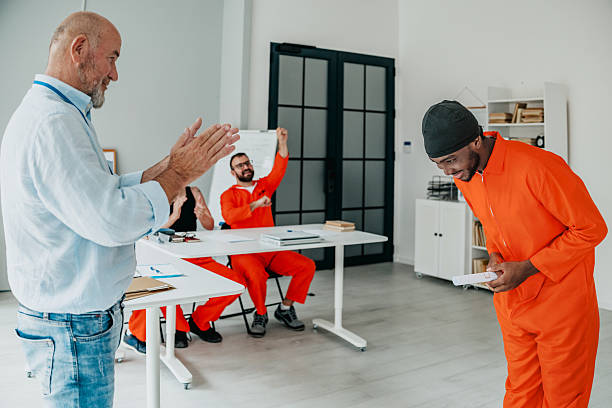
Serving time inside a correctional facility presents severe psychological challenges. Harsh environments and strict institutional rules wear down personal self-esteem over time. Incarcerated individuals often feel powerless as routines and choices disappear. However, personal growth remains possible even within restrictive concrete walls.
Building self-confidence does not require grand gestures or impossible feats. Instead, true psychological strength grows through small, consistent daily achievements. This comprehensive guide explores how incremental progress transforms mindset, supports emotional wellness, and prepares individuals for successful community reentry.
The Psychology of Self-Confidence Behind Bars
Self-confidence represents an individual's belief in their ability to succeed and handle life challenges. In carceral settings, institutional messaging frequently undermines this internal belief system. Constant surveillance and loss of autonomy foster feelings of helplessness and chronic despair. Psychologists refer to this psychological condition as learned helplessness.
Reversing learned helplessness requires reclaiming control over small, manageable daily actions. When you complete a small goal, your brain releases dopamine, reinforcing positive behavior loops. This neurological reward builds internal momentum and restores personal agency. Small daily wins prove to yourself that you remain capable of positive change.
Transforming your mindset requires shifting focus from things you cannot control to things you can. You cannot change your current physical confinement immediately, but you can control your daily responses. Cultivating self-confidence acts as a protective psychological shield against depression and institutional burnout.
Understanding the Power of Micro-Goals
Micro-goals are tiny, easily achievable tasks completed consistently every single day. Setting massive goals inside prison often leads to frustration and premature quitting. Breaking large objectives into microscopic steps ensures continuous progress without overwhelming stress.
For example, reading an entire law book in one week is unrealistic. Reading two pages every morning before breakfast represents an achievable micro-goal. Achieving micro-goals compounds over time, leading to major life transformations.
The table below illustrates how micro-goals outperform massive, unstructured objectives in a prison environment.
Objective Type | Example Goal in Prison | Psychological Outcome |
Massive Objective | "I will become completely fluent in Spanish this month." | Overwhelming frustration and eventual quitting |
Micro-Goal | "I will learn and practice five new Spanish vocabulary words daily." | Steady mastery, high confidence, and long-term retention |
Massive Objective | "I will completely eliminate all negative emotions this week." | Unrealistic pressure and feelings of personal failure |
Micro-Goal | "I will practice three minutes of deep breathing when feeling angry." | Improved emotional control and self-mastery |
Step 1: Establishing a Structured Daily Routine
A predictable daily routine forms the bedrock of personal growth during incarceration. Correctional schedules impose external structures, but personal routines provide internal psychological grounding. Taking control of your personal hours creates stability amidst chaotic facility environments.
Wake up at the exact same time every morning to regulate your circadian rhythm. Plan your daily schedule the night before using a personal notebook. Assign specific time slots for exercise, reading, personal hygiene, and reflection.
The list below outlines essential elements of a confidence-building daily routine:
- Wake up early and make your bed with absolute precision and neatness.
- Dedicate the first ten minutes of your morning to quiet mental reflection or prayer.
- Schedule mandatory physical exercise to boost endorphins and mental clarity.
- Reserve afternoon hours for educational study, reading, or skill development.
- Review your daily accomplishments every evening before lights out.

Step 2: Practicing Rigorous Personal Hygiene and Grooming
Environmental degradation inside correctional facilities makes personal upkeep easy to neglect. Depression often manifests as poor hygiene and abandoned grooming habits. However, maintaining high standards of personal cleanliness directly influences self-perception. When you look clean and well-groomed, your brain registers self-respect.
Treat your morning shower and grooming routine as a sacred ritual of self-worth. Keep your clothing neat, pressed, and clean regardless of your surroundings. Shave regularly, keep your hair trimmed, and maintain clean fingernails.
The table below correlates personal grooming habits with psychological well-being.
Grooming Habit | Physical Action in Prison | Direct Psychological Benefit |
Daily Showering | Thorough washing using basic commissary soap | Refreshes the body and signals a fresh daily start |
Clothing Care | Hand-washing and folding institutional uniforms neatly | Enhances personal dignity and visual self-respect |
Dental Hygiene | Brushing teeth meticulously twice daily | Prevents health issues and promotes bodily care |
Posture Correction | Standing tall with shoulders back during movement | Communicates confidence to others and elevates mood |
Step 3: Engaging in Micro-Learning and Skill Building
Mental stagnation poses a major psychological hazard during long prison sentences. Feeding your mind with productive information rebuilds intellectual confidence. You do not need formal university enrollment to learn valuable new skills. Prison libraries and educational programs offer rich resources for self-improvement.
Dedicate thirty minutes daily to reading non-fiction books, history, science, or literature. Learn a new language using vocabulary lists and grammar handbooks. Write essays, poetry, or journal entries to sharpen your communication skills.
The list below highlights accessible learning activities you can practice independently:
- Borrow educational textbooks from the facility library and study daily.
- Practice mental math and logic puzzles to maintain cognitive sharpness.
- Study professional development guides and business management principles.
- Learn basic drawing or sketching techniques to stimulate creative expression.
- Memorize poetry, historical speeches, or philosophical quotes to strengthen memory.
Step 4: Physical Fitness and Movement Goals
Physical health and mental self-confidence connect deeply through neurological pathways. Exercise releases powerful neurotransmitters that elevate mood, reduce stress, and sharpen focus. You do not need expensive gym equipment to build physical strength inside a cell. Bodyweight exercises provide an effective path to physical fitness.
Set realistic, progressive fitness micro-goals rather than exhausting yourself immediately. Start with five push-ups on day one and increase by one repetition daily. Tracking physical progress provides concrete proof of discipline and growing capability.
The table below outlines a progressive bodyweight fitness framework suitable for prison cells.
Exercise Type | Beginner Micro-Goal | Advanced Progression Goal |
Push-Ups | 10 controlled repetitions daily | 50 continuous strict repetitions |
Bodyweight Squats | 15 slow repetitions daily | 100 continuous deep squats |
Core Planks | 20 seconds holding time daily | 3 minutes continuous holding time |
Stretching | 5 minutes morning flexibility work | 15 minutes full-body mobility routine |
Step 5: Practicing Emotional Regulation and Mindfulness
Self-confidence collapses when anger or fear dictates your daily behavior. Correctional environments constantly test emotional patience through noise, friction, and conflict. Developing emotional regulation gives you mastery over your internal state. Mindfulness techniques help you pause between environmental triggers and personal reactions.
Practice diaphragmatic breathing whenever frustration or anxiety begins to rise. Inhale slowly through your nose for four seconds, hold for four, and exhale for four. This physiological reset calms your nervous system and restores cognitive control.
The list below outlines daily mindfulness practices for emotional stability:
- Practice box breathing for five minutes whenever tension arises in the housing unit.
- Observe your passing thoughts without judging yourself or feeling guilty.
- Keep a daily gratitude journal listing three small positive things from the day.
- Consciously relax your jaw, shoulders, and hands during moments of stress.
- Use positive internal self-talk to replace defeatist or negative thoughts.

Step 6: Acts of Service and Prosocial Behavior
Self-confidence grows rapidly when you shift focus from your own struggles to helping others. Incarcerated environments provide countless opportunities for quiet acts of kindness. Helping a peer write a letter, sharing educational insights, or listening to someone in distress builds community value.
Prosocial behavior activates brain circuits associated with empathy, connection, and self-worth. When you contribute positively to your peers, you redefine your identity. You cease viewing yourself merely as a prisoner and start acting as a supportive community member.
Acts of service require zero financial cost but yield immense psychological rewards. Offer to clean shared table spaces without being asked. Tutor a peer who struggles with reading or writing skills. Stand up as a calming presence during housing unit disputes.
Step 7: Reframing Negative Self-Talk
Internal dialogue shapes your emotional reality and personal expectations. Negative self-talk creates self-fulfilling prophecies of failure and inadequacy. Phrases like "I cannot handle this" or "I am a failure" destroy self-confidence systematically. Reframing internal dialogue builds mental resilience.
Catch negative thoughts the moment they enter your conscious awareness. Challenge their validity by asking for objective factual evidence. Replace defeatist statements with empowering, realistic affirmations of personal capability.
The table below illustrates how to reframe common negative thoughts into empowering internal dialogue.
Negative Self-Talk | Underlying Cognitive Distortion | Empowering Reframed Thought |
"I always mess everything up." | All-or-nothing thinking | "I made a mistake, but I can learn from it and improve." |
"This situation is totally hopeless." | Catastrophizing | "This situation is very difficult, but I can handle today." |
"I am too weak to change now." | Labeling | "Change takes time, and my daily micro-habits make me stronger." |
"Nobody cares what happens to me." | Personalization | "I care about my growth, and my daily efforts matter." |
Step 8: Documenting Progress in a Personal Journal
Human memory often minimizes past achievements during stressful periods. Documenting your daily progress in a written journal provides tangible proof of growth. Keep a dedicated notebook to record micro-goals, completed tasks, and personal reflections.
Review your past journal entries weekly to observe how far you have traveled. Seeing written records of books read, workouts completed, and emotional hurdles overcome builds bulletproof self-confidence. Your journal serves as a private testament to your evolving character.
The list below details what to include in your daily personal growth journal:
- List three specific micro-goals you successfully completed today.
- Record one new concept, word, or fact learned during your studies.
- Write down one moment where you successfully controlled your emotional reaction.
- Outline your primary micro-goals for the following day.
- Write a brief encouraging note to your future self.

Step 9: Overcoming Setbacks and Maintaining Resilience
Building self-confidence is never a linear upward trajectory. Incarcerated life presents unpredictable disruptions, lockdowns, and personal disappointments. Setbacks do not mean failure; they represent natural data points in the learning process.
When you experience a setback, avoid harsh self-criticism or emotional collapse. Analyze what went wrong objectively without attaching emotional shame to your identity. Adjust your micro-goals if necessary and resume your daily routine immediately.
Resilience is the capacity to recover quickly from difficult life obstacles. Every time you bounce back from a prison setback, your internal confidence strengthens permanently. Embrace challenges as testing grounds for your developing character.
Conclusion
Building self-confidence during incarceration is a quiet, deliberate, and deeply personal journey. By focusing on micro-goals, establishing structured daily routines, maintaining personal hygiene, and practicing emotional regulation, you reclaim personal agency. Small daily achievements compound over time, transforming your internal mindset and preparing you for successful community reentry. True strength does not depend on your physical surroundings; it grows from your daily commitment to personal growth, self-respect, and unyielding human dignity.
Frequently Asked Questions
Can self-confidence really be built inside a prison environment?
Yes. While external circumstances remain out of your control, your internal mindset, daily habits, and emotional responses remain entirely within your personal power.
What are micro-goals, and why do they work so well?
Micro-goals are tiny, easily achievable tasks. They prevent overwhelm, trigger positive dopamine loops, and build steady momentum without causing burnout.
How can I maintain a routine when facility lockdowns disrupt my schedule?
Build flexible contingency plans into your routine. If you cannot walk outside during a lockdown, substitute cell workouts, reading, or mental exercises instead.
What should I do when negative self-talk feels overwhelming?
Pause, practice deep breathing to calm your nervous system, write down the negative thought on paper, and actively reframe it into an objective, empowering statement.
Is physical exercise necessary for building mental self-confidence?
Exercise is not strictly mandatory, but physical movement releases powerful brain chemicals that dramatically improve mood, discipline, and mental clarity.
How do acts of service improve personal self-worth?
Helping others shifts your focus away from internal stress, activates empathy, and proves that you add positive value to your surrounding community.
Why is personal hygiene so important for mental health?
Your brain interprets your physical cleanliness and grooming as a direct reflection of self-respect. Looking neat signals self-worth to your own mind.
How often should I review my personal journal progress?
Review your journal entries at the end of every week to validate your accomplishments and recognize ongoing personal growth patterns.
What is the biggest obstacle to building self-confidence in prison?
The biggest obstacle is waiting for major external changes before feeling worthy. True confidence starts internally through small, daily, self-directed actions.
Can reading books truly change my mindset behind bars?
Yes. Reading exposes you to new perspectives, high-level ideas, and proven psychological strategies that expand your worldview and cognitive flexibility.
Legal information
Related Articles
More from the blog
Published articles selected by matching category, then the latest published.
 VisitationHow to Prepare for Your First Prison VisitA complete step-by-step guide on how to prepare for your first prison visit. Learn about visitor approval, dress codes, required identification, security searches, and visiting room rules.
 VisitationWhat to Do If Your Prison Visitation Is DeniedLearn what steps to take if your prison visitation application is denied. This comprehensive guide covers common denial causes, administrative appeals, background checks, and alternative communication methods.
 VisitationUnderstanding Prison Visitation Rules and RequirementsA complete guide explaining prison visitation rules and requirements. Learn about visitor applications, dress codes, required identification, contraband rules, and security screening procedures.
Find forms, resources and support
Explore court-ready forms, the resource directory, or contact us for help with a similar issue.